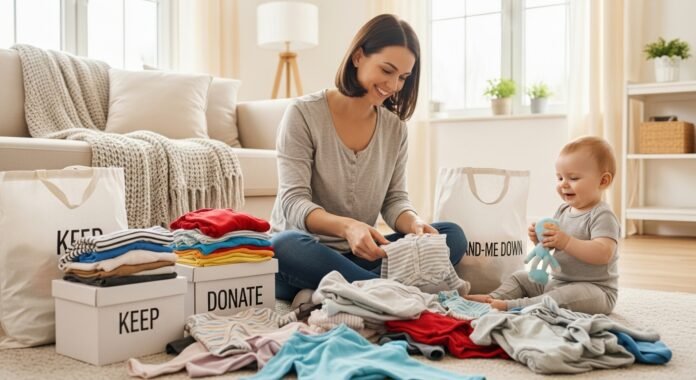
I’ll never forget the $25 onesie.
It was organic cotton, printed with tiny foxes, and absolutely perfect. I bought it when my daughter was three months old, imagining how adorable she’d look in it. She wore it exactly once. By the following week, her chubby thighs had rendered the snap closure a mathematical impossibility, and the foxes went into the “too small” bin, where they joined approximately 47 other barely-worn outfits.
That $25 onesie now haunts me from a landfill somewhere, and my bank account still hasn’t fully recovered.
Here’s the thing about baby clothes that no one tells you before you have a baby: they are not an investment. They are a utility. Like diapers or wipes, their job is to keep your child covered and comfortable for a brief period before being replaced. The average baby outgrows their clothes every 2-3 months in the first year, with some growth spurts rendering entire wardrobes obsolete in weeks.
The baby clothing industry would love you to believe that each tiny outfit is a precious keepsake worth every penny. But after two kids and countless dollars wasted, I’ve learned the truth: spending a fortune on baby clothes is both unnecessary and counterproductive. Less money on clothes means more money for experiences, diapers, and—let’s be honest—the takeout you’ll survive on during the fourth trimester.
Here’s how to keep your baby dressed beautifully without breaking the bank.
The Mindset Shift: Baby Clothes Are a Utility, Not a Collection
Before we dive into strategies, let’s reframe how you think about baby clothes. Your goal isn’t to stop buying clothes—babies do need to be clothed, after all. The goal is to change your relationship with them.
Think of baby clothes like rental cars. You need them for a short time, you want them to be safe and functional, and then you return them (or in this case, pass them on). You wouldn’t spend $25,000 customizing a rental car, so don’t spend $25 on a onesie your baby will wear once.
This mindset shift is liberating. It frees you from the guilt of not buying the expensive outfit, from the stress of trying to keep clothes pristine, and from the overwhelm of a overflowing closet. Your baby doesn’t care if their onesie cost $3 or $30. They care if they’re comfortable, fed, and held.
Now, let’s get practical.
Strategy 1: Embrace the Hand-Me-Down Ecosystem
Hand-me-downs are the original circular economy, and they’re still the most effective way to clothe a baby for free.
Why It Works
Babies grow so fast that clothes rarely have time to wear out. The hand-me-downs you receive will likely be in excellent condition, and they come with an added bonus: they’ve been washed multiple times, making them softer and safer for sensitive baby skin .
How to Build Your Network
Start by telling everyone you know: “We’d love to take any baby clothes you’re clearing out—and we’ll pass them forward when we’re done!” Be specific about sizes and seasons if you can.
Cast a wide net:
- Friends and family with older children
- Coworkers who’ve recently aged out of the baby phase
- Neighbors and community groups
- Local parent Facebook groups
The Ask Script
Here’s a simple, comfortable way to ask: “We’re getting ready for the baby and trying to be budget-conscious. If you ever have any outgrown clothes you’re planning to donate, we’d be thrilled to give them a second life with us. No pressure at all, but we wanted to put it out there.”
Most people are delighted to pass things on. It saves them the hassle of donating and gives them the warm feeling of helping a new family.
The Golden Rule of Hand-Me-Downs
When you receive hand-me-downs, accept everything gratefully. Sort through it later. Pass along what you don’t need to the next expecting parent. This is how communities have raised children for generations.
Strategy 2: Master the Secondhand Market
For the clothes that don’t come through your network, the secondhand market is your best friend. And here’s a little secret most people don’t tell you: “gently used” baby clothes almost always means “worn once, maybe twice.”
The Best Platforms
Once Upon A Child is the gold standard for brick-and-mortar consignment. They’re picky about quality, so what makes it to the racks is in great shape. Prices are typically 50-70% below retail, and they often have sales where you can stock up for pennies on the dollar.
ThredUp is excellent for browsing from home. Their “bundles” feature lets you buy multiple items at once, and they frequently run promotions. Look for their “New With Tags” section for items that were bought and never worn.
Poshmark and Kidizen are perfect for finding specific brands or higher-end items. If you fell in love with that organic cotton brand but refuse to pay full price, you’ll find it here for a fraction of the cost.
Facebook Marketplace is where the local deals live. Search for “baby clothes lot [size]” and you’ll find parents selling entire wardrobes for $20-$40. This is especially effective for seasonal items like snowsuits or Halloween costumes.
What to Look For
When inspecting secondhand items:
- Check all snaps and zippers—they should work smoothly
- Hold the garment up to natural light to check for stains
- Look at the knees and elbows for wear (less relevant for babies, but good practice)
- Smell for mustiness (a sign of improper storage)
What to Wash
Wash everything before first use, even items that look clean. Use a gentle, fragrance-free detergent designed for sensitive skin.
Strategy 3: Buy Out of Season and Size Up
This strategy requires a bit of foresight, but it pays off enormously.
The Concept
Buy larger sizes during end-of-season clearance sales. That $50 winter coat you need in December? Buy it in February for 75% off, in a size your baby will fit next winter.
Key Sale Periods
- January-February: Winter clearance (coats, snowsuits, sweaters)
- July-August: Summer clearance (swimsuits, shorts, sundresses)
- November-December: Holiday sales and end-of-year clearances
- End of each month: Many stores mark down seasonal items to clear floor space
The Size-Up Strategy
When you find a great deal, buy a size or two larger than your child currently wears. Store it in a labeled bin by size and season. When the time comes, you’ll have a wardrobe waiting for you at a fraction of the cost.
This is “time-travel shopping” at its finest, and it transforms you from a panicked shopper paying full price into a calm, prepared parent who got everything on sale.
Strategy 4: Build a Capsule Wardrobe
The average baby wardrobe contains far more clothes than any baby could possibly wear. The solution is a capsule wardrobe: a small collection of versatile, mix-and-match pieces.
The Newborn Capsule (0-3 Months)
- 5-7 onesies (short or long sleeve depending on season)
- 2-3 pants or leggings
- 3-4 sleepers (babies live in these—don’t skimp)
- 2-3 tops or bodysuits for layering
- 1-2 cardigans or lightweight jackets
- 4-5 pairs of socks
- 2 hats (one warm, one sun-protective)
The Magic of Neutral Colors
Stick to a neutral color palette—whites, grays, creams, soft greens, or blues. This allows you to mix and match everything, so 10 pieces can create 20 different outfits. When everything coordinates, you don’t need 50 pieces to feel like your baby has variety.
The Laundry Reality
Babies are messy. You’ll do laundry constantly. A capsule wardrobe forces you to stay on top of it, but it also means you’re not drowning in clothes you’ll never wear. When you find yourself reaching for the same five sleepers over and over, you’ve found your capsule.
Strategy 5: Choose Expandable and Convertible Clothing
This is where innovation meets frugality. A new generation of brands is creating clothes that actually grow with your child.
The Game-Changers
Petit Pli uses aerospace-inspired pleats that allow their clothes to expand in multiple directions. A single garment can fit a child from 12 months to 5 years . The initial cost is higher—around $50-$70 per piece—but the cost-per-wear drops to pennies.
Jackalo makes durable organic cotton clothes with reinforced knees and a trade-up program. When your child outgrows them, you can trade them in for credit toward the next size .
Nine Clothing uses clever pleats and adjustable features to create pieces that fit from ages 0-6 . Their onesies convert to t-shirts, and pants adjust from newborn to toddler.
Beya Made focuses on longevity and durability, with clothes designed to last three times longer than typical children’s wear .
The Cost-Per-Wear Calculation
When evaluating these brands, do the math. A $60 Petit Pli outfit that fits for 4 years costs $15 per year. A $20 outfit that fits for 3 months costs $80 per year. The “expensive” option is actually the bargain.
Strategy 6: Organize and Participate in Clothing Swaps
Clothing swaps are the ultimate expression of the circular economy—and they’re surprisingly fun.
How to Host a Swap
- Invite 5-10 parent friends with children of various ages. The sweet spot is having a range of sizes so everyone finds something.
- Ask everyone to bring clean, gently used clothes in labeled bags by size and season.
- Set up tables by size and let the trading begin.
- Anything left at the end gets donated to a local charity.
The Rules
Make it clear that everything is free and the goal is to find new homes for clothes, not to get equal value. Some people will bring 20 items and take 5. Others will bring 5 and take 20. It all balances out over time.
The Community Bonus
Swaps build community in a way that shopping never can. You’ll meet other parents, share stories, and leave with not just clothes but connections.
Strategy 7: Rent for Special Occasions
That elaborate Easter dress. The tiny tuxedo for a wedding. The professional photo shoot outfit. These are not everyday items, and they don’t need to be purchased.
Rental Options
BabyQuip is like Airbnb for baby gear, including clothes. You can rent outfits by the day or week from local providers.
Nuuly and similar clothing rental services now include children’s options in some markets.
The Math
A $50 dress rented for $15 beats a $50 dress worn once and stored forever. Even a $30 rental beats a $40 purchase that your child will never wear again. For one-time events, renting is the clear winner.
Strategy 8: Know What’s Worth Buying New
I’m not saying you should never buy anything new. Some items genuinely deserve a spot in your budget.
Buy New:
- Car seat covers and inserts (must meet safety standards and not be compromised)
- Socks and underwear (hygiene matters)
- A few special pieces that bring you genuine joy
- Basics you’ll use constantly like high-quality sleepers and onesies
Buy Used:
- Everything else. Seriously.
Strategy 9: Recoup Costs by Reselling
The cycle doesn’t end when your child outgrows their clothes. You can recoup a significant portion of your spending by reselling.
Where to Sell
Once Upon A Child offers immediate cash, though at lower prices. It’s convenient and fast.
Facebook Marketplace works well for selling in lots. “12-month boy summer clothes, 20 pieces, $30” will sell faster than individual listings.
Poshmark and Kidizen are better for higher-end items you’re willing to ship.
What to Expect
Consistent reselling can recoup 25-30% of your original costs . That $200 you spent on clothes becomes $50-$60 back in your pocket. It’s not a fortune, but it’s something—and it keeps clothes in circulation longer.
Bundle for Success
Seasonal bundles sell best. “Summer clothes, size 18 months” is clear and attractive. Include a mix of pieces and price it to move.
Strategy 10: Practice Responsible Disposal
Eventually, clothes reach the end of their life. Stains that won’t come out. Snaps that won’t snap. Knees that finally gave way.
Second Life Ideas
- Stained white onesies become excellent cleaning rags
- Soft flannel or cotton can be cut into burp cloths
- Fabric scraps can become stuffing for memory pillows or toys
- Buttons and snaps can be saved for craft projects
Textile Recycling
Many stores now accept old clothes in any condition. H&M has a textile recycling program that takes worn-out items and gives you a discount on future purchases . Other retailers are following suit.
The goal is to keep clothing out of landfills. The average American throws away 70 pounds of textiles annually, much of which could be recycled . By finding second lives for your baby’s clothes, you’re not just saving money—you’re helping the planet.
Sample Budget Breakdown
Let’s put this all together with a realistic example.
The Traditional Approach:
- Buying new at retail: $800-$1,000 per year
- Clothes worn 1-3 times each
- Constant guilt about unworn items
The Smart Approach (Using These Strategies):
- Hand-me-downs and swaps: 40% of wardrobe = $0
- Secondhand purchases: 40% of wardrobe = $150
- New purchases (basics and special items): 20% of wardrobe = $100
- Total annual spend: $250
- Resale of outgrown items: Recoup $60
- Net annual cost: $190
That’s $600-$800 saved every year, money that can go toward diapers, formula, or a college fund.
Your First Steps Checklist
If you’re feeling overwhelmed, start here:
- Tell your network you welcome hand-me-downs. Use the script provided.
- Visit a Once Upon A Child (or similar consignment store) to see what’s available.
- Create a capsule wardrobe list for your baby’s current and next size.
- Join your local Buy Nothing group on Facebook and introduce yourself.
- Shop one end-of-season sale for next year’s sizes.
- Host or attend one clothing swap in the next six months.
- Set up a labeled bin system for outgrown clothes by size.
The Bottom Line
Your baby will never remember the price tag on their onesie. They won’t know whether the adorable fox print came from a boutique or a consignment store. They won’t care if their wardrobe cost $1,000 or $100.
What they will remember—what they’ll feel—is whether you were present, whether you were calm, and whether you had the energy to hold them, sing to them, and love them.
Every dollar you don’t spend on clothes they outgrow in a month is a dollar you can spend on something that matters more. Time off work. A college fund. A night of takeout so you don’t have to cook. Sleep (okay, maybe not sleep, but you get the idea).
The strategies in this article aren’t about deprivation. They’re about freedom—freedom from guilt, freedom from clutter, freedom from the pressure to buy into an industry that profits from your love.
Dress your baby beautifully. Dress them warmly. Dress them in clothes that make you smile. Just don’t spend a fortune doing it.
You’ve got this.
Sources: ModernMom guide to budget baby shopping ; Jackalo brand philosophy and trade-up program ; Petit Pli expandable clothing technology ; Beya Made sustainable children’s wear ; Nine Clothing grow-with-me design ; BabyQuip rental marketplace ; Once Upon A Child consignment model ; ThredUp resale data ; H&M textile recycling program .